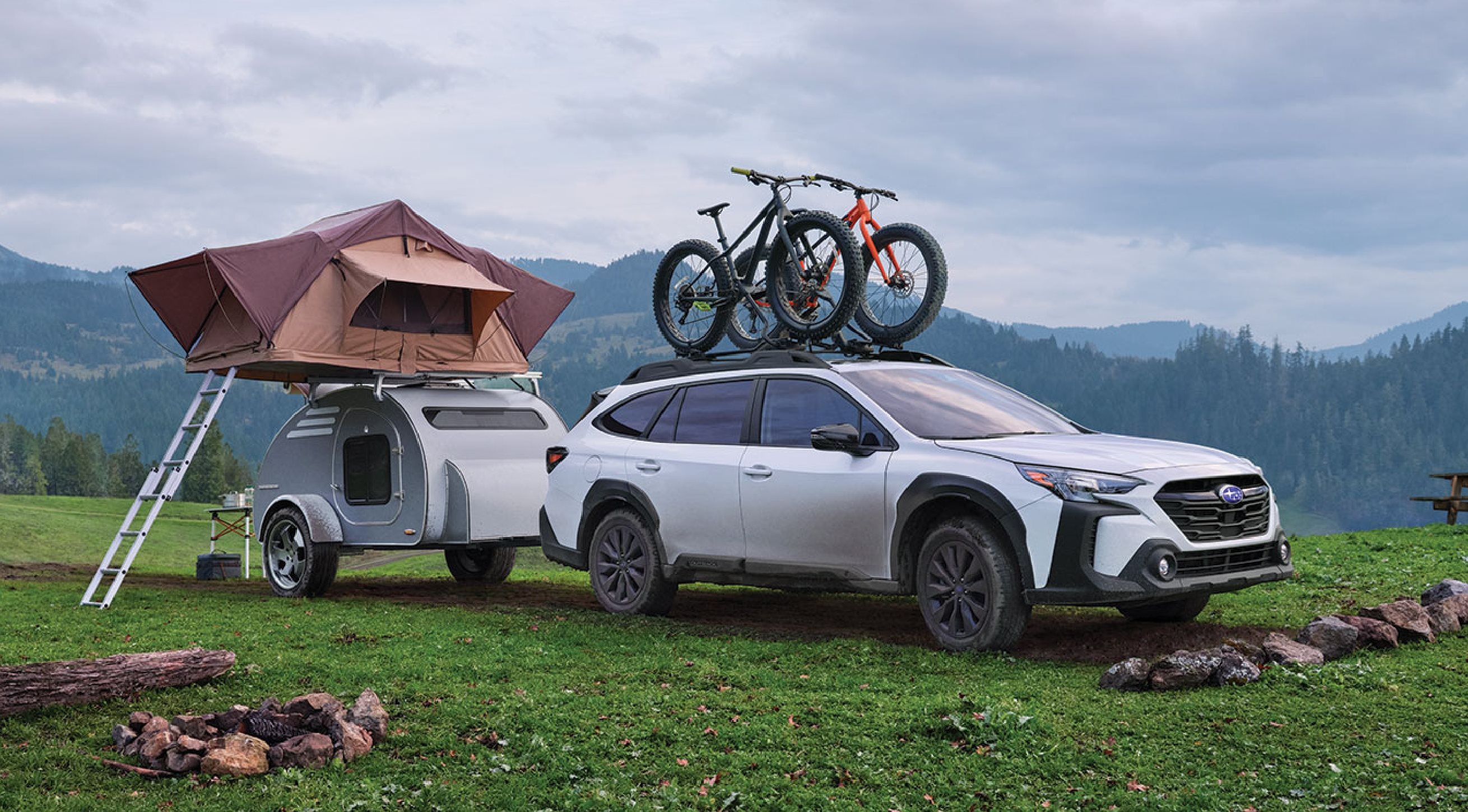
Is the Outback a Real SUV?
The short answer is “Yes,” and the long answer still begins with “Yes”. Just because you can still see the Legacy in its design doesn’t make the Outback any less capable off-road. The vast majority of SUVs out there derive their platforms and mechanicals from conventional front-wheel drive (FWD) car platforms. These are also often referred to as “Crossovers”. Subaru is just more honest about the Outback’s passenger car’s origins by using the Legacy body and interior but beefing up the mechanicals and drivetrain technologies in all the right places. Consequently, in year after year of comparison tests, the Outback has proven to be one of the most capable crossover SUVs you can buy.
What Kind of Engines Are In the Outback?
The Outback’s base engine is a 2.5-liter 4-cylinder engine, which like all Subaru engines, features a horizontally opposed (aka known as “flat” or “boxer”) configuration. The advantages of a boxer design include reduced vibration, a lower center of gravity, more efficient cooling, and symmetrical positioning. The engine produces 182 horsepower and 176 lb-ft of torque. The Wilderness, Touring, and Onyx Edition XT are equipped with a turbocharged 2.4-liter flat-4 producing 260 horsepower and 277 lb-ft of torque. Both engines are connected to a Lineartronic® Continuously Variable Transmission (CVT) that features an 8-speed manual mode. Like all Subarus except the BRZ sports car, all Outbacks have Symmetrical All-Wheel Drive.
What Is Different About Symmetrical All-Wheel Drive?
To understand why Subaru calls its system Symmetrical All-Wheel Drive, you first have to know what is not symmetrical about other systems. Almost all other crossovers are derived from FWD platforms which will have a V-6 or inline-4 engine sitting sideways and off-center in the engine bay with the transmission positioned beside it. Power emerges from the transmission very much to one side of the vehicle, which then must be split to be sent back to the other front wheel and, on AWD models, to the rear wheels. On Subaru models, the flat engine is mounted longitudinally and square in the vehicle’s centerline, as is the transmission behind it and the differentials for power distribution. To look at it from the top, the entire drivetrain is perfectly symmetrical to the left and right sides. This helps make power distribution to all four wheels and power transfer from wheels without traction more efficient.
What Does X-Mode Do?
When the terrain gets rough is the time to engage the Outback’s X-Mode system, which works at speeds below 25 mph to keep you from getting stuck. Subaru likens X-Mode’s role to that of a symphony conductor coordinating all of the drivetrain’s components to work together, including the AWD system, throttle, transmission, Vehicle Dynamics Control System, and Hill Descent Control. Leveraging their half-century experience with AWD systems, Subaru has programmed X-Model to optimize all these systems based on the mode of terrain selected.
What Is the Outback’s Cargo Capacity?
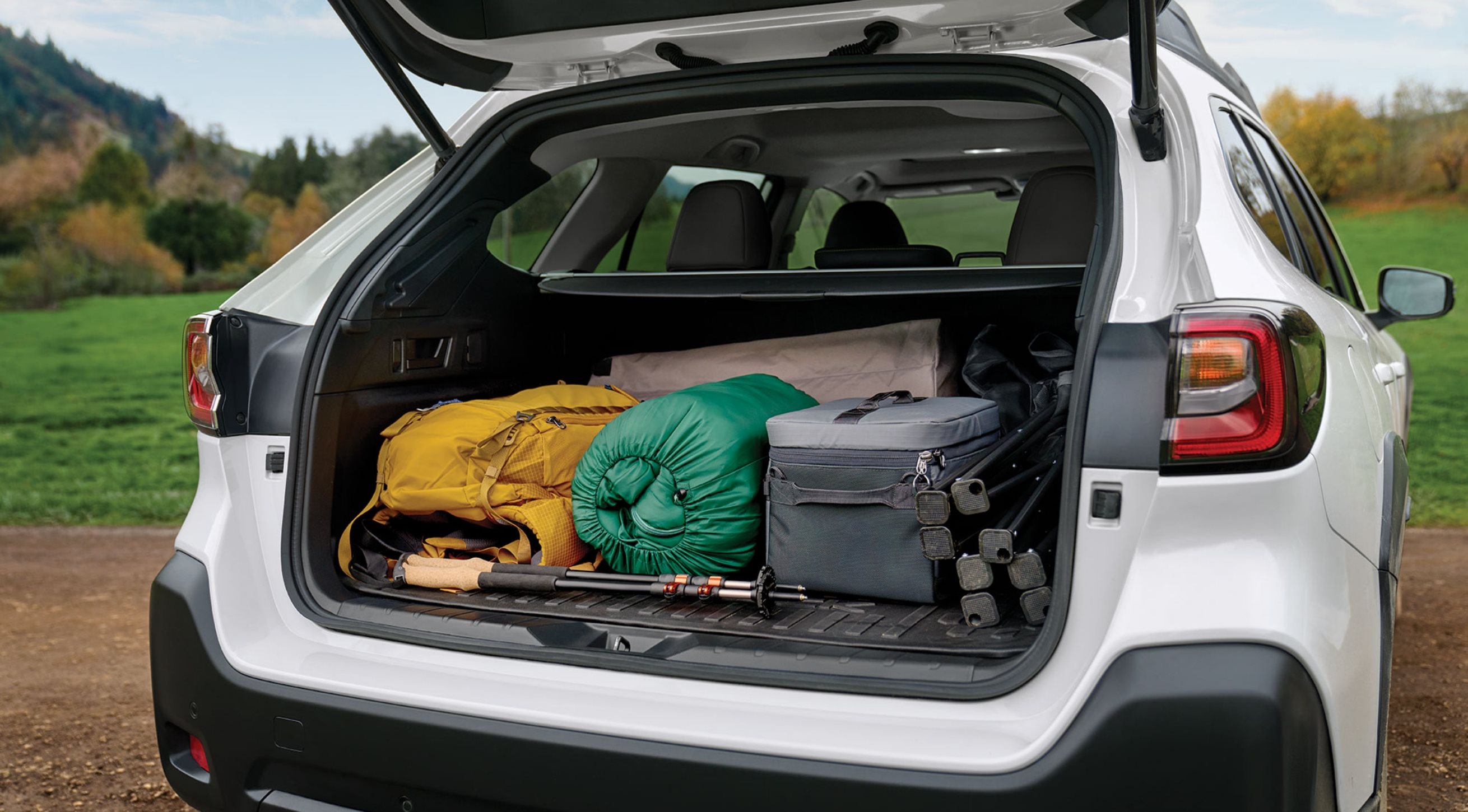
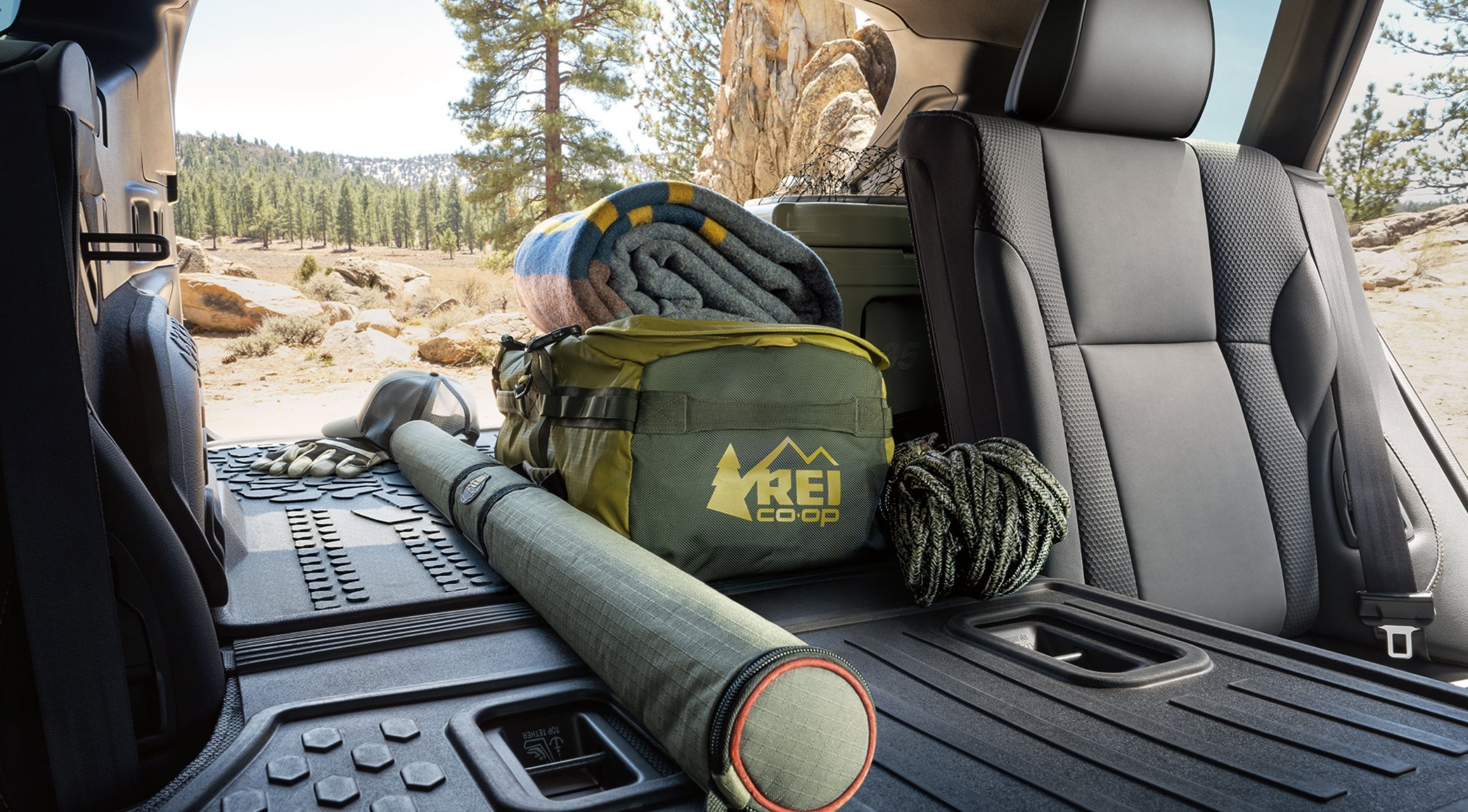
With the rear seats up, there is 32.5 cubic feet of cargo space. With the rear seatbacks folded, the space increases to 75.7 cubic feet.
What Kind of Connectivity Does the Outback Have?
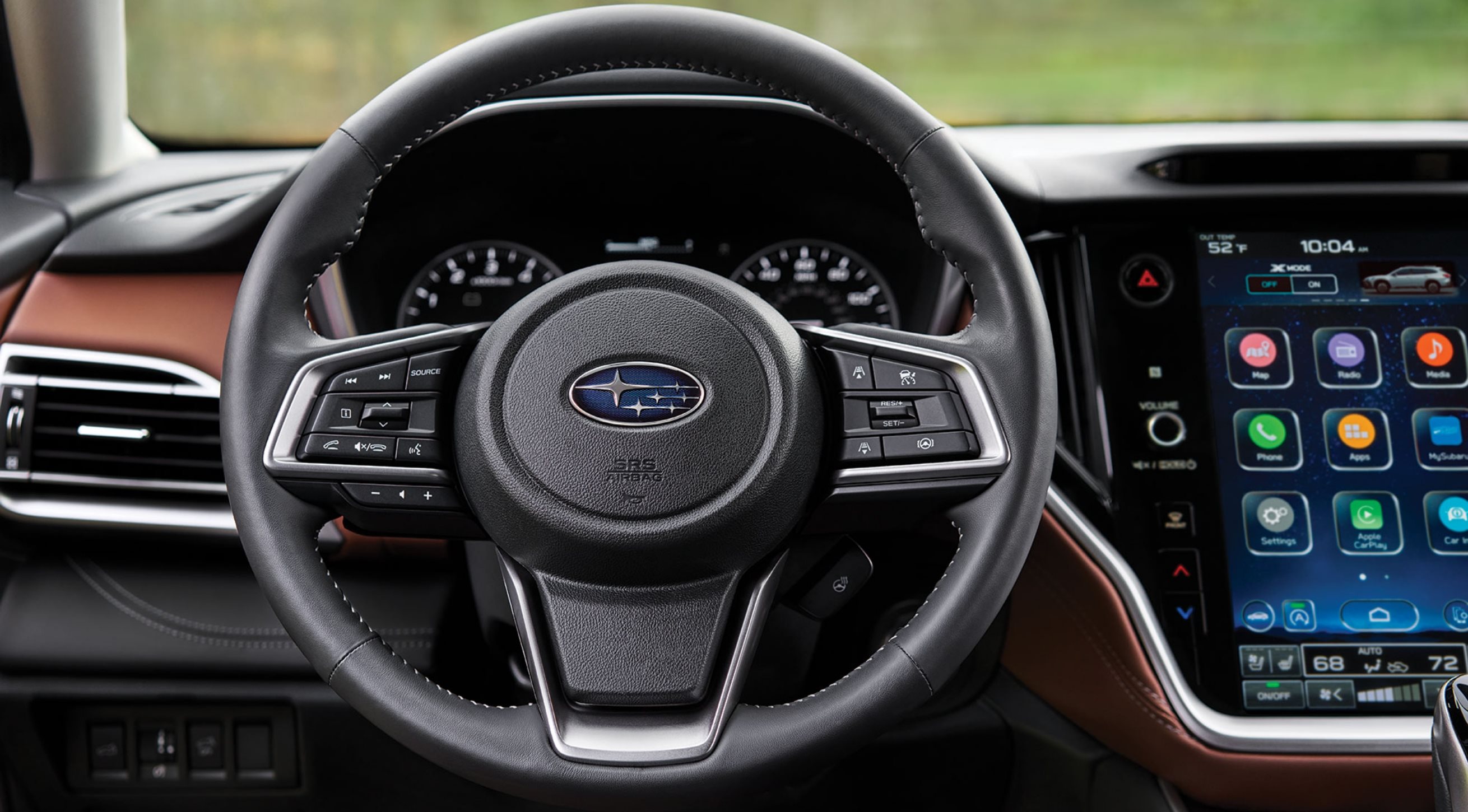
The base trim has wired Apple CarPlay® and Android AutoTM compatibility for its 7.0-inch touchscreen. All other trims have the StarLink® 11.6-inch Multimedia touchscreen with wireless Apple CarPlay® and Android AutoTM compatibility. In addition, all models have a front USB-A input port. All but the base models also have a front USB-C input port plus both USB-A and C charging ports for rear passengers. 4G LTE Wi-Fi capability is available. All but the Base and Premium trims have a standard 12-speaker, 576-watt, Harman Kardon® premium audio system.
What Kind of Safety Features Are in the Outback?
Subaru has an enviable reputation for safety in the industry, exemplified by the fact that they have earned more IIHS Top Safety Pick+ awards than any other brand across the past ten years. Every Subaru Outback comes with the EyeSight® Driver Assist Technology, a suite of driver assist and safety systems that includes:
- Advanced Adaptive Cruise Control with Lane Centering
- Pre-collision Braking
- Lane Departure and Sway Warning
- Lane Keep Assist
- Automatic Emergency Steering
Additional systems that are available or standard on all but the base model include:
- DriverFocus® Distraction Mitigation System
- Blind-Spot Detection with Lane Change Assist and Rear Cross-Traffic Alert
- Reverse Automatic Braking
If you spend any time in the coldest and most mountainous areas in North America, you will see plenty of new and old Outbacks as those residents know what vehicle to trust to get them anywhere they need to be at any time of the year. If that sounds like the type of vehicle for you, come to Centennial Subaru and take a close look at the wide variety of Outbacks we have waiting for you.